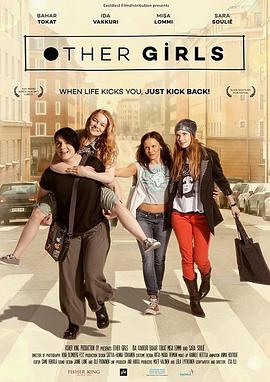
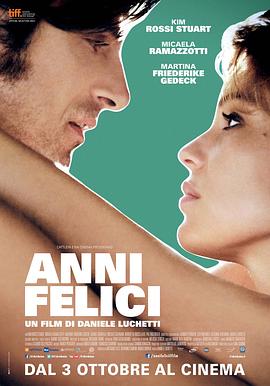
Four 18-year-old girls Jessica, Jenny, Taru and Aino are on the verge of adulthood as they lose their innocence and, at times, their faith. Based on the story of four 18-year-old girls from Helsinki who kept provocative video diaries about their lives during the course of a year, in 2011. 影片讲述四个18岁的女孩耶西卡、燕妮、达鲁和艾诺正处于成年的边缘,她们开始对未来产生迷茫,学业、生活以及懵懂的爱情。故事根据四个18岁女孩的故事改编。
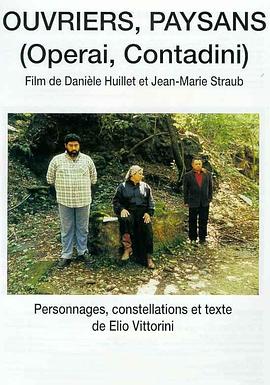
Veteran experimental filmmakers Danielle Huillet and Jean-Marie Straub helmed this unusual adaptation of a novel by Elio Vittorini. Focused on the triumphs and failures of a group of laborers and farm hands who pooled their resources to operate an alternative collective farm after the end of World War II, Operai, Contadini features a cast of 12 actors who read aloud from Vittorini's book for the duration of the film, either reciting from memory or using a clearly visible script. Hardly designed to be a crowd pleaser, Operai, Contadini proved to be controversial among the audiences for its showings at the 2001 Cannes Film Festival, where it was screened as part of the Directors' Fortnight series. ~ Mark Deming, All Movie Guide The group makes up a primitive community which seeks to erase not only the distress created by the war but also the hardships of life and hunger, and to protect them from violence, misery and fear. Amid the ruins of this post-war period, the characters build and invent a rapport both in their professional and daily lives between themselves, the sexes, generations, diverse social and geographical origins, and antagonistic political camps. The group maintains a 'register', a kind of diary, as if it were entering the minutes of an inquiry or a trial. -Steve Grayson my favorite Straub-Huillet films are Too Early, Too Late and Operai, contadini (2001), both color landscape films with especially acute senses of place as well as of nature in all its harsh beauty. - Jonathan Rosenbaum
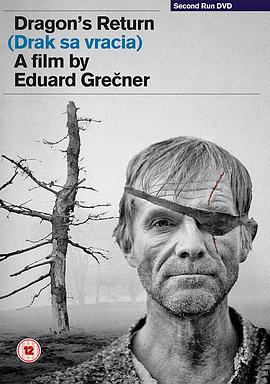
与Stefan Uher和Elo Havatta一样,Eduard Grecner也是60年代斯洛伐克新浪潮电影的缔造者之一。他的三部影片《一周七天》(1964)《尼绒月亮》(1965)和这部《徳拉克的回归》都是斯洛伐克新浪潮电影的代表作。这部叙事方法独特带有明显意识流风格的黑白影片甚至间接影响到了后来法国导演格里耶在捷克拍摄的两部影片《说谎的人》和《Eden and After》。 A special place in the development of feature films is reserved for Eduard Grecner, the creator of just one good film, Dragon Returns (Drak sa vracia, 1967), titled after the nickname of the lead character. After his initial work with Uher, Grecner made his mark as a proponent of the so-called intellectual film, the antithesis of the sociologically, or rather, socially critical film. Grecner's great role model was Alan Resnais, a young French filmmaker who sought to introduce Slovakia to the idea of film as a labyrinth in which meanings are created not by stories, but by complex configurations of dialogue, shots, and various layers of time, thus differentiating film from both literature and theater. In Dragon Returns―the story of a solitary hero who is needed by villagers living far in the mountains, but who is rejected by them at the same time because of his detachment―Grecner brought the tradition of lyricized prose to life through a whole series of formal aesthetic techniques. Alain Robbe-Grillet immediately developed this idea in the film shot in Bratislava The Man Who Lies (Slovak Muz, ktory luze; French title L'homme qui ment; 1968), and perfected it in Eden and After (Eden a potom, 1970).