五岁的泽泽(João Guilherme de Ávila 饰)是一个和其他小孩不太一样的男孩,他似乎比同龄人要成熟的多,在圣诞节那天出生的他在刚开始总是被亲戚朋友们视为上帝的恩赐,但他出生在一个贫穷而且多灾多难的家庭之中,在父亲事业,妈妈和姐姐不得不进工厂打工后,泽泽在家里的待遇一落千丈,常常遭到莫名的打骂的责难。 虽然泽泽的日子很难过,但他依然用自己的热情和善良温暖着周围的每一个人。泽泽喜欢将自己的不幸遭遇和幻想中的朋友们倾诉,其中,有一颗甜橙树被他视为最亲密的好友。泽泽的生命中出现了一个阿葡(何塞·阿布雷乌 José de Abreu 饰)的男人,渐渐的,这个男人取代了甜橙树,成为了泽泽在现实生活里唯一的依靠。
Bayern, 1965. Kaum ein Jahrzehnt hat Deutschland gesellschaftlich so revolutioniert wie die sechziger Jahre. Der Kalte Krieg beherrschte das politische Klima, der Minirock eroberte die Mode, und die Beatles machten dem heimischen Schlager Konkurrenz. Von all dem unberührt scheint das bayerische Dorf Lehrbach - bis zu dem Tag, als Julia Welling (Henriette Richter-Röhl) auftaucht, um im Auftrag der katholischen Kirche ein Kinderheim aufzubauen. Ihre modernen pädagogischen Erziehungsmethoden und ihre emanzipierte Art passen so gar nicht zum traditionellen Familienbild, das auf dem Land noch immer herrscht. Dort hat der Mann das Sagen, gehört die Frau an den Herd und gelten Kinder vor allem als billige Arbeitskräfte in der Landwirtschaft. Kein Wunder, dass nicht nur die Bauern, sondern auch Pfarrer Weber (Andreas Lust) und Bürgermeister Huber (Stephan Zinner) nicht gut auf die zugereiste Städterin zu sprechen sind. Schließlich setzt sich Julia über ihre Pläne hinweg und kauft statt der alten Gerberei eine leerstehende Kaserne der amerikanischen Truppen, um darin das Kinderheim einzurichten. Unerwartete Unterstützung erhält Julia von David Carter (David Rott). Der US-Major wickelt die Auflösung des Militärstandortes in Lehrbach ab und ist von Julias Selbstbewusstsein fasziniert. Doch die Sympathie, die beide für einander empfinden, wird schon bald von Julias Zweifel überschattet, ob ihre Liebe eine Chance haben kann. Denn als Soldat verkörpert David alles, was Julia ablehnt
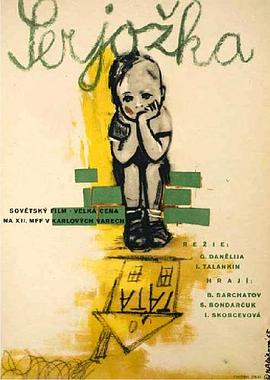
1960年捷克卡罗维发利国际电影节最佳导演水晶球奖。 Originally titled Seryozha, the Russian A Summer to Remember was co-adapted by Vera Panova from her own short story. War and Peace director Sergei Bondarchuk plays the new stepfather of young Seryozha (Borya Barkhatov). So close do the stepfather and the boy become in the months following their meeting that, when time comes for the boy to move on in life, he refuses to leave his new dad's side. Their summer idyll takes place on a Soviet collective farm, managed by Bondarchuk and depicted by novice filmmakers Georgiy Daneliya and Igor Talankin in the most glowing and apolitical of terms. Though there isn't much to the plot, the film admirably succeeds as a sort of cinematic tone poem. From All Movie Guide Russian filmmaker Georgi Daneliya ranks among his country's most popular directors of satirical comedies. The Georgia-born Daneliya comes from a distinguished family of film performers; his grandmother, Veriko Andzhaparidze, was a famed Georgian silent film actress, his cousin, Sofiko Chiaureli, is also a major actress, and his mother, Meri Andzhaparidze, spent more than a decade at Mosfilm Studios. However, he first chose to train as an architect (perhaps out of respect for his father, an engineer). Following his graduation in 1955, Daneliya worked only briefly in that field when he decided he'd rather be in films, enrolling in Mosfilm Studios' Directors' Courses in 1958. In 1960, Daneliya co-directed SeryozhaA Summer to Remember with Igor Talankin. Two years later, he made his solo directorial debut, Put K PrichaluThe Way to the Wharf (1962). His 1969 comedy Ne Goryuy!Don't Worry! successfully blended humor and melancholy, a device that would become Daneliya's trademark. In addition to directing, Daneliya co-authors the scripts for his films and occasionally works on screenplays for other directors. Daneliya has won numerous national and international awards for his work. In 1964, his Ya Shagayu po MoskveI Walk Around Moscow received an honorable mention at the Cannes Film Festival, while in 1975 Afonya received a special award at the All Union Festival, a major U.S.S.R. event. Daneliya's biggest hit in the U.S.S.R., Mimino (1977), earned the special prize at the Moscow International Film Festival and the U.S.S.R. State Prize. In 1991, Daneliya earned the Nika Award (the Russian equivalent to an Oscar) for Best Screenplay for Pasport (1990).